
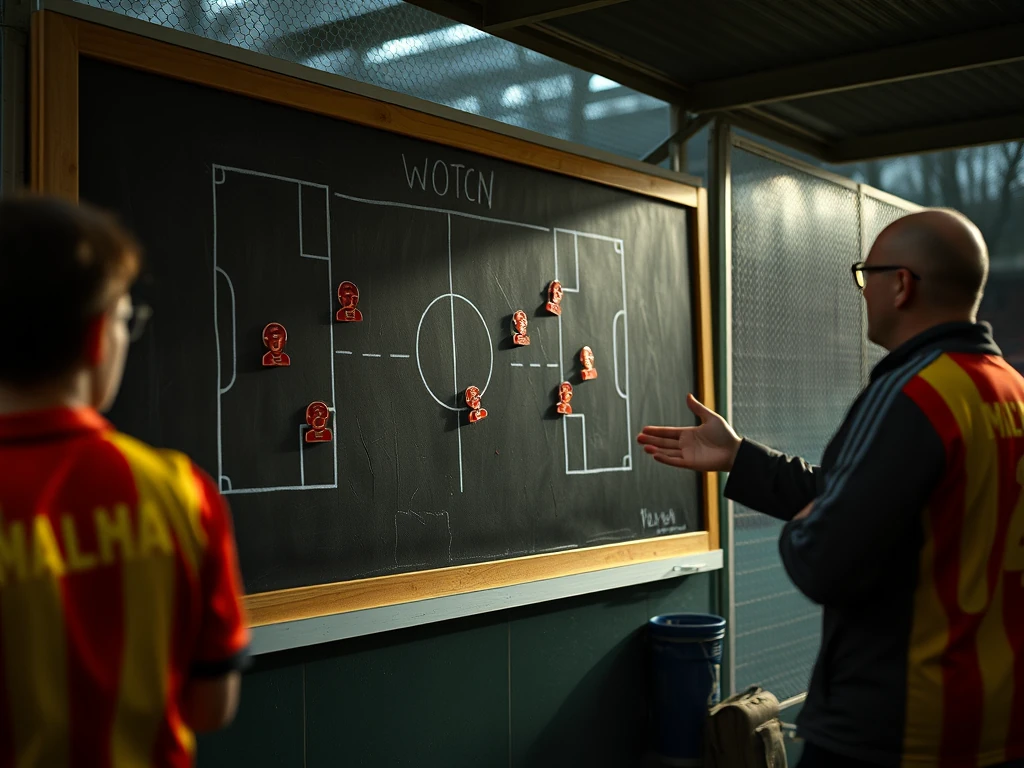
Tweaking Boreham Wood's Formation for Greater Success
Boreham Wood has shown flashes of brilliance this season, but as they look to climb the National League standings, some tactical tweaks could make all the difference. Analyzing their recent form, it's clear that while the team's core principles remain solid, certain adjustments in formation and player positioning could lead to improved results on the pitch.
Current Formation and Its Limitations
Currently, Boreham Wood often adopts a 4-2-3-1 formation, a setup that allows for a robust midfield presence while providing width through the wingers. However, in recent matches, this formation has exposed them defensively, especially when transitioning from attack to defence. Opposing teams have exploited gaps left in the wide areas, particularly in counter-attacks, leading to a number of avoidable goals against.
Suggested Tactical Adjustments
1. Transition to a 4-3-3 Formation
One potential tweak could be a shift to a 4-3-3 formation. This setup not only strengthens the midfield but also allows for more dynamic attacking options. By deploying three central midfielders, Boreham Wood can gain better control of the midfield battles, stifling the opposition's creativity while enhancing their own attacking transitions. The wide forwards could also drop back when needed, providing additional defensive cover.
2. Role Reassessment of Midfield Players
With a potential switch to a 4-3-3, reassessing the roles of midfield players becomes key. C. Bush could take on a more advanced role, using his vision and passing range to connect with the forwards. Meanwhile, R. Booty could anchor the midfield, focusing on breaking up play and distributing the ball effectively. This would allow A. Henry to roam freely, adding creativity and flair to the attack.
3. Defensive Coordination
Defensively, Boreham Wood needs to work on their coordination, especially during transitions. The backline, led by N. Ashmore, must communicate effectively to avoid being caught out of position. Introducing a more defined pressing strategy could help in regaining possession higher up the pitch, reducing the pressure on the defence and giving the team more opportunities to score.
4. Exploiting Set-Pieces
Boreham Wood has had limited success with set-pieces this season. By focusing on training routines that maximize their height advantage, particularly with players like C. Bush contributing offensively during corners and free-kicks, The Wood could convert more opportunities from dead-ball situations. This could be a big change, especially in tightly contested matches.
Conclusion
As Boreham Wood looks to stays in the National League, tactical adjustments could play a key role in their quest for success. A shift to a 4-3-3 formation, along with a reassessment of player roles and a more coordinated defensive approach, could enhance their performance. By fine-tuning these elements, The Wood can not only improve their immediate results but also lay the groundwork for a more successful season ahead.